It certainly has been awhile! I’m student teaching this semester (and loving every minute of it) so things have been busy around here. I have had some time the last few days, though, because we got hit by a ton of snow and schools have been closed now for over a week! I’m sure the kids are loving it, but I’m ready to get back.
I spent some time last week working on a lesson for our poetry unit and I thought some of you might be interested in what I put together. Some time ago I read an article by Judith Jester in which she talked about how we “read” paintings in the same way we read literature. I wanted to use this idea so I went on a hunt for four poems that I could match to four paintings. This was a lot more difficult than you’d think! Below is what I found.

I matched Edna St. Vincent Millay’s “Afternoon on a Hill” with Claude Monet’s Poppies at Arguenteuil (shown above).

Deborah Chandra’s poem “Bubbles” matched Jean-Baptiste-Simeon Chardin’s Boy Blowing Bubbles.

Tiger in a Tropical Storm (Surprised!) by Henri Rousseau seemed a great illustration of “Tiger Dance” by Carconti Etva.

And “Wind Pictures” by Mary O’Neill (scroll toward the bottom of the page to find the poem) paired well with N.C. Wyeth’s The Giant.
All of the poems except Tiger Dance can be found in The 20th Century Children’s Poetry Treasury selected by Jack Prelutsky. It’s really a great book. It has so many wonderful poems, all illustrated superbly by Meilo So.
My thought is to have the students read each poem and look at each painting and decide which painting to pair with which picture. Then they’ll write about how they made the pairings.
I’m excited about this lesson. I’ll let you know how it goes.

 Mount Rushmore is located in the Black Hills in South Dakota:
 About 2 million people visit each year and I can understand why. The massive faces of former presidents George Washington, Thomas Jefferson, Theodore Roosevelt, and Abraham Lincoln have been carved into the mountainside in stunning detail that’s impossible to portray in a photograph. It’s tough to believe that the monument was meant to be much larger.
 It wasn’t easy to carve the faces into the solid granite mountain. The men had to blast away a lot of the rock using dynamite before they could begin to carve. They used a jackhammer, like the one below, to make holes for the dynamite.
 Dynamite was also used to erase mistakes from the mountain. Borglum originally settled on a design for the mountain that put Thomas Jefferson to the left of George Washington. When he discovered that the rock on that side of George Washington wasn’t strong enough to support the sculpture, the men blasted Jefferson off the mountain and began again on the other side of Washington.
 This process took 14 years; carving began in October 1927 and ended in October 1941.
 In March 1941, Borglum died and his son took over the project. The United States became involved in World War II and Congress decided that we could not spend any more money on Mount Rushmore. It declared the mountain a finished piece of art.
 I’m sure many of you have seen this project done elsewhere, but I love it. It’s quick and simple, and each child’s art piece is unique and creative. I like it as a beginning of the year project, especially if you’re studying fingerprints and fingerprinting. In Maryland, fingerprinting is often the first science unit that third graders complete, so hopefully this post is timely.
 Choose an ink color. This will be the body of your thumbprint animal. Press your thumb into the ink pad and then onto the center of your cardstock square. You should push your thumb straight down and then lift it straight up so your thumbprint doesn’t smear.
 Decide what animal you’d like to create. I made a butterfly, a frog, a spider, and a rabbit. You might choose to make a chick, a fly, or an animal from your own imagination. Draw the face and details with a fine-tipped marker.
 Sign your name at the bottom of your square. Frame and enjoy!


 Then I put the picture in the refrigerator to harden. I have now discovered that white chocolate doesn’t melt thinly enough to pour so I had to spread it with a knife which had the unfortunate effect of smearing some of the painting. And there for next time I will use a true chocolate background.
 Now I must go make the cheesecake!
 Well, it all started with an illustrator named Randolph Caldecott. Throughout his life, he created artwork for magazines. He illustrated novels and drew cartoons. He sculpted and painted. He even illustrated his letters, drawing pictures around the edges of the pages.
 In 1938, the Association for Library Service to Children awarded the first Caldecott Medal. The award was named in honor of Randolph Caldecott and the winner had to contribute to children’s literature the way Caldecott had. The illustrations had to be original artwork and they had to help tell the story.
 Supplies Needed:
 I’m going to walk you through the steps to create this bird, but keep in mind that you can make any animal like this. If you have been studying butterflies for example, you might want to make a butterfly.
 Next, prepare the cardboard. This will become your tree. Peel the back off of the cardboard so you’re left will ridges. Squeeze some brown paint onto a palette or plastic lid. Cut another small strip of cardboard and dip the edge in the paint. Dab off some of the paint and then stamp the edge onto the large piece of cardboard several times. You’re just trying to make the cardboard look more like a tree. Work until you’re happy with the look of your tree, then set it aside to dry. It will dry quickly.
 Next, glue down the leaves and grass. Use white glue when gluing to cardboard (because of the ridges) and a glue stick when gluing to the background page.
 Remember to sign your name somewhere on your masterpiece!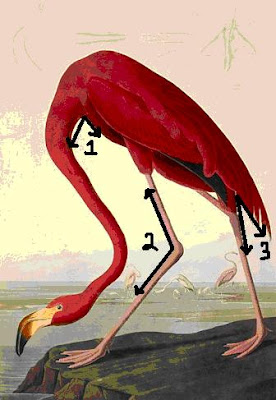


 Let your tissue paper dry. Eric Carle recommends using this time to paint more sheets of tissue paper in different colors. I only used one sheet but you may want more than one pattern or color. Your tissue paper will need to dry for about 30 minutes.
 I used four colors but you may decide to use only three or try five. It’s all up to you and your imagination. Just remember to let your tissue paper dry after each new layer of paint.
 When your finished tissue paper is dry, trace hearts of different sizes onto your paper. Try to fit as many hearts as you can. Carefully cut out the hearts.
 Choose construction paper, fold it in half, and cut it into two cards. Repeat until you have as many cards as you wish to make.
 Repeat until you have decorated all of your cards.
 Cover your workspace before you begin. You’ll need a place to set your paint covered spoon and marbles. You may also want a cup of water for rinsing you spoon. Or just use a different spoon for each color paint.
 Rinse your spoon or use a new one. Squirt a new paint color onto your spoon and roll a clean marble in it. Drop the marble into the box lid and roll it around.
 Let your painting dry. Remove it from the box lid and enjoy!